

Defense, security & relief
Resupply past the horizon.
No one aboard.
A hybrid-electric VTOL that moves a hundred-kilogram load hundreds of kilometers, on the fuel already at the base. ITAR-free. Built in Europe. NATO-interoperable.
What it is for
Loads and distances far beyond a typical drone, without a helicopter's cost or crew.
A long-range uncrewed cargo VTOL: helicopter access with fixed-wing range, hybrid-electric, remotely piloted. It carries cargo, or deploys the sensors and communications a mission needs.
A drone in that class cannot carry these loads this far. A helicopter can, and does, at its own cost and with a crew aboard. This aircraft takes many of those runs, scheduled or urgent, behind the force or ahead of its main body, with one operator on the ground and no crew to scramble.
The leg that puts two aircrew at risk today is flown with no one aboard and one operator on the ground.
No aircrew, no hangar, a piston generator's fuel burn instead of a turbine's.
No runway, no charger, nothing assembled on site. It arrives under its own power and refuels from what is there.
Flexibility
Trade payload for range.
Payload and range trade against each other. Set the load, read the range, and the mission picks the operating point.
Indicative, not a performance guarantee.
Fuel makes the trade possible: a battery weighs the same full or empty.
The missions
Four missions, drawn to their reach.


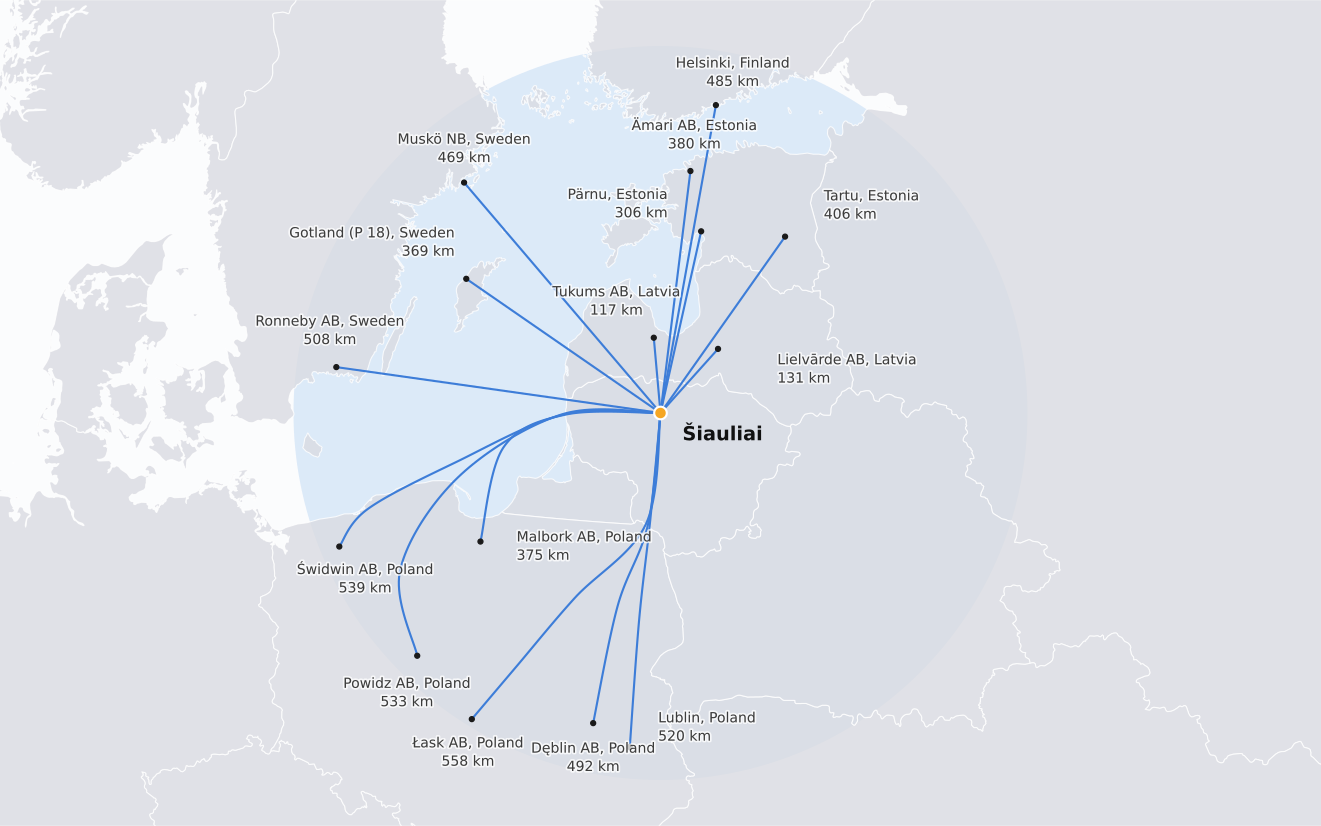
Rations, fuel, ammunition, and spares to crews and depots held back from contested ground, hundreds of kilometers at a time, ship to shore included. Distance is the protection, and the leg that would otherwise expose a crew is flown without one.
Šiauliai → Ämari AB, 380 km · Zuri under two hours, no crew exposed · a road convoy, most of a day
One Baltic ring: five nations' bases inside a single reserve circle.
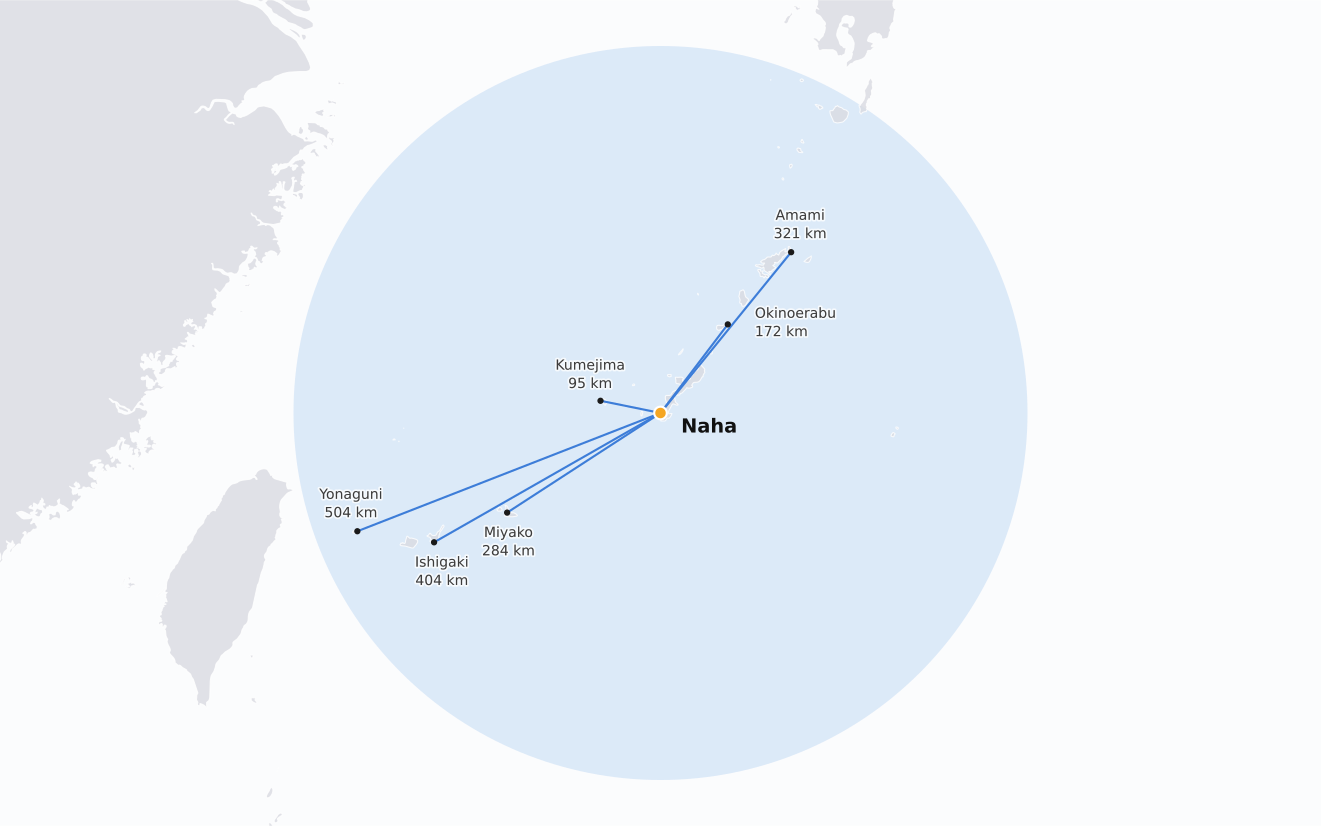
Swappable EO/IR, SIGINT, or radar payloads over land and littoral, and a loitering relay node above dispersed forces. Long linear patrol is what a wing is for: pipelines, grids, ports, and borders. Between resupply tasks, the logistics fleet doubles as the sensing fleet.
Naha → Yonaguni, 504 km · Zuri on station in about two hours · a crewed patrol aircraft, with a crew aboard throughout
One island chain: the picket line from Kumejima to Yonaguni, all inside the circle.
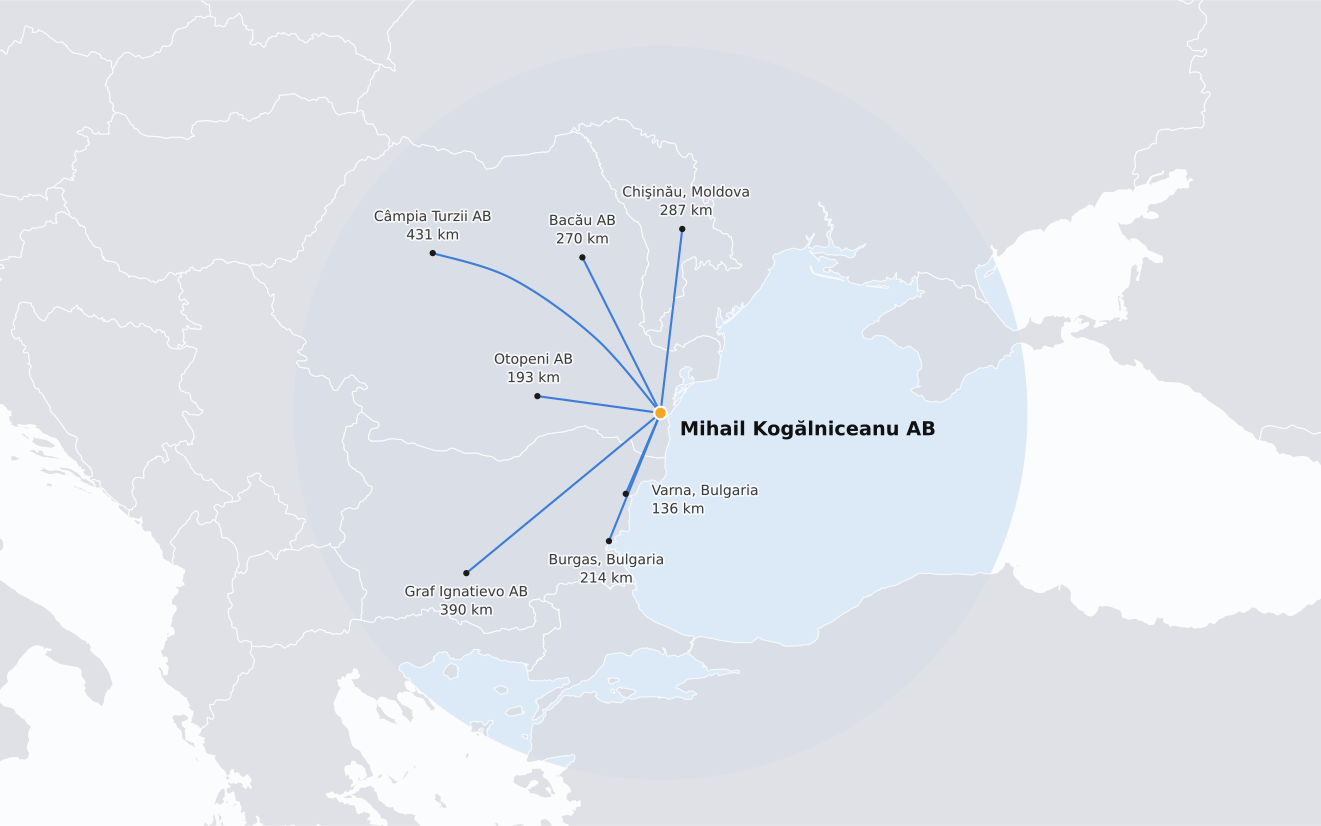
Batteries, ammunition, medical supplies, and spares dispersed from the flank's main hub through sky where satellite navigation fails daily. Flown uncrewed, navigating by vision when signals are jammed, spoofed, or gone.
Mihail Kogălniceanu AB → Chișinău, 287 km · Zuri under 90 minutes, no crew exposed · a road convoy, a border crossing and most of a day
One Black Sea ring: four air bases, two ports, and a partner capital inside a single reserve circle.
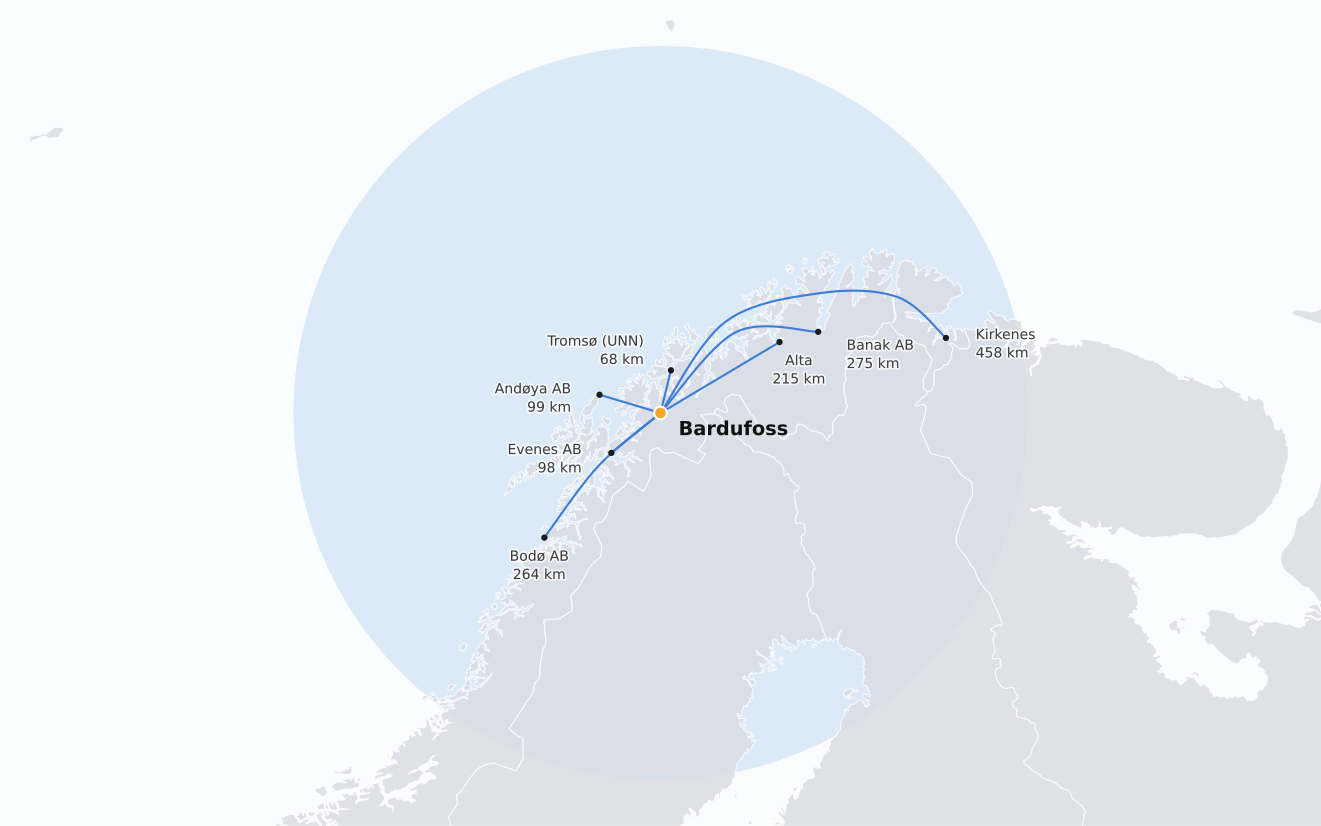
Blood, equipment, and medical kits to the point of injury ahead of the evacuation, and resupply for the aid station that keeps working after the road closes. High-latitude distances and difficult ground access are exactly the gap.
Bardufoss → Kirkenes, 458 km · Zuri forward in about two hours · the road, most of a day, weather permitting
One Arctic hub: Andøya to Kirkenes, with the university hospital at Tromsø 68 km out.
Representative scenarios, not scheduled services. Reach maps and named programs are for direct conversations. Mission views are renders.
Ask about a mission not listed →European, by construction
Designed and built in Prague.
For a European buyer, where an aircraft is designed, built, and sourced decides whether it can be bought at all. Six facts a procurement office checks first.
ITAR-free
No ITAR authorization sits between a European operator and the aircraft.
NATO interoperability
Designed against the standards European forces already operate to.
A century of Czech aerospace
Airframe and integration in Prague, at a European cost base. Quality system headed for AS9100.
European and allied suppliers
Generator engine from Norway, electric motors from Slovenia. The cargo aircraft is planned on European sourcing throughout.
Navigation under jamming
GNSS and EGNOS fused with an independent vision stack that keeps navigating when satellite signals are jammed, spoofed, or gone.
Degraded modes
Controllable after a rotor failure; after a generator failure, the battery carries the landing.
Technology Demonstrator 2.0
The architecture is being proved now.
Subscale models have flown hover, transition, and cruise. Our first demonstrator hovered at full scale. Technology Demonstrator 2.0 brings every element of a hybrid VTOL together in one full-scale aircraft, now in ground test. The cargo aircraft is the same design, built for service.

TD 2.0's generator engine, built by EdgePerformance, running on the test stand in Prague.
What remains is integration and flight test, not invention.
Frequently asked questions
For defense and security readers.
Is it ITAR-free?
Yes. Designed and built in the EU on a European and allied supply base, so no ITAR authorization sits between a European operator and the aircraft. Other export rules apply, as to any aircraft.
Does it carry people?
No. It carries cargo, sensors, and communications relay, not people. Casualty evacuation stays with crewed aircraft; this one carries the blood, kits, and equipment forward ahead of them.
How is it authorized to fly?
Civil operations fly under the EASA Specific category, risk-assessed per route through SORA at SAIL III, with no passenger type certificate in the way. Military operations are authorized by each nation's own aviation authority, and that civil safety case is where the conversation starts. A defense operator already runs this mission, already pays for it, and can authorize the flight.
How is it controlled?
Remotely piloted: one operator on the ground, stick and throttle in hand and a computer beside them, in command of the mission while automation handles the flying. The ground station is designed to take the operator's own communications and navigation. For its own navigation, GNSS and EGNOS are fused with an independent vision stack, visual odometry and terrain matching on a separate computer.
Has it flown, and when does it enter service?
Zuri has flown more than fifteen aircraft since 2018 and has held full-scale hover since 2021. Technology Demonstrator 2.0, the full-scale aircraft carrying the whole architecture, is in ground test in Prague, with flight testing planned to begin in 2027. The uncrewed cargo aircraft is the same design, built for service, and flies its own test campaign.
Request a briefing.
Bring the route you fly today. We will tell you what the aircraft does with it, and when.