

Missions
Routine and
extraordinary.
One base, a site with no runway, and a round trip measured in hours. The pattern repeats below; only the geography changes.
Civil
The cost is getting there.


Ships, platforms, wind farms, and islands. Offshore resupply today means a costly helicopter or a five-kilogram drone; Zuri reaches the same decks with over a hundred kilograms. Deck rules that demand two engines get their redundancy here from distributed propulsion.
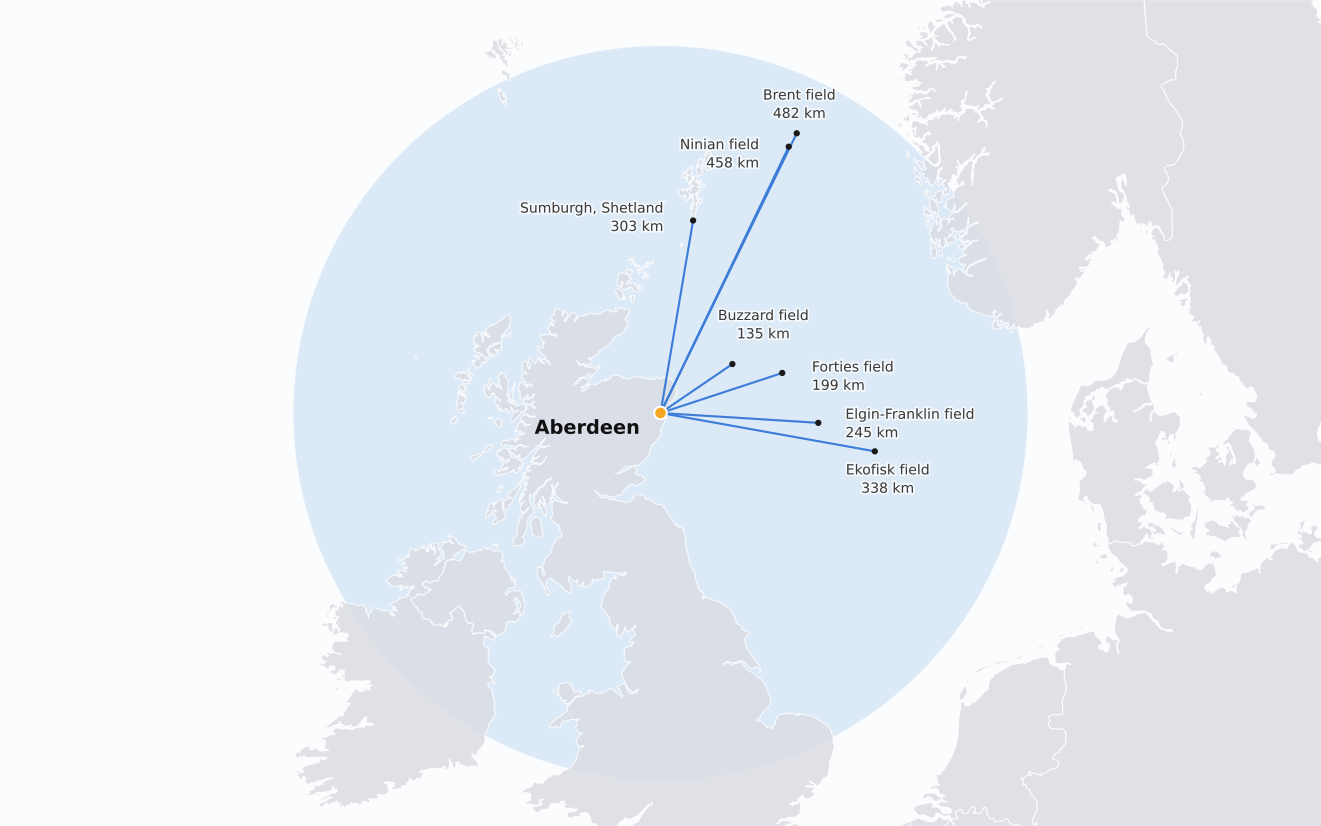
Aberdeen → Forties, 199 km · Zuri out and back inside two hours · the supply boat, the better part of a day
One North Sea hub: seven named fields from Buzzard to Brent, Shetland staging at 303 km.
Whole archipelagos and cut-off communities served from one hub. Freight that waits for a ferry schedule or a chartered helicopter arrives on demand, and the same pattern reaches mountain sites and anywhere the road ends before the need does.
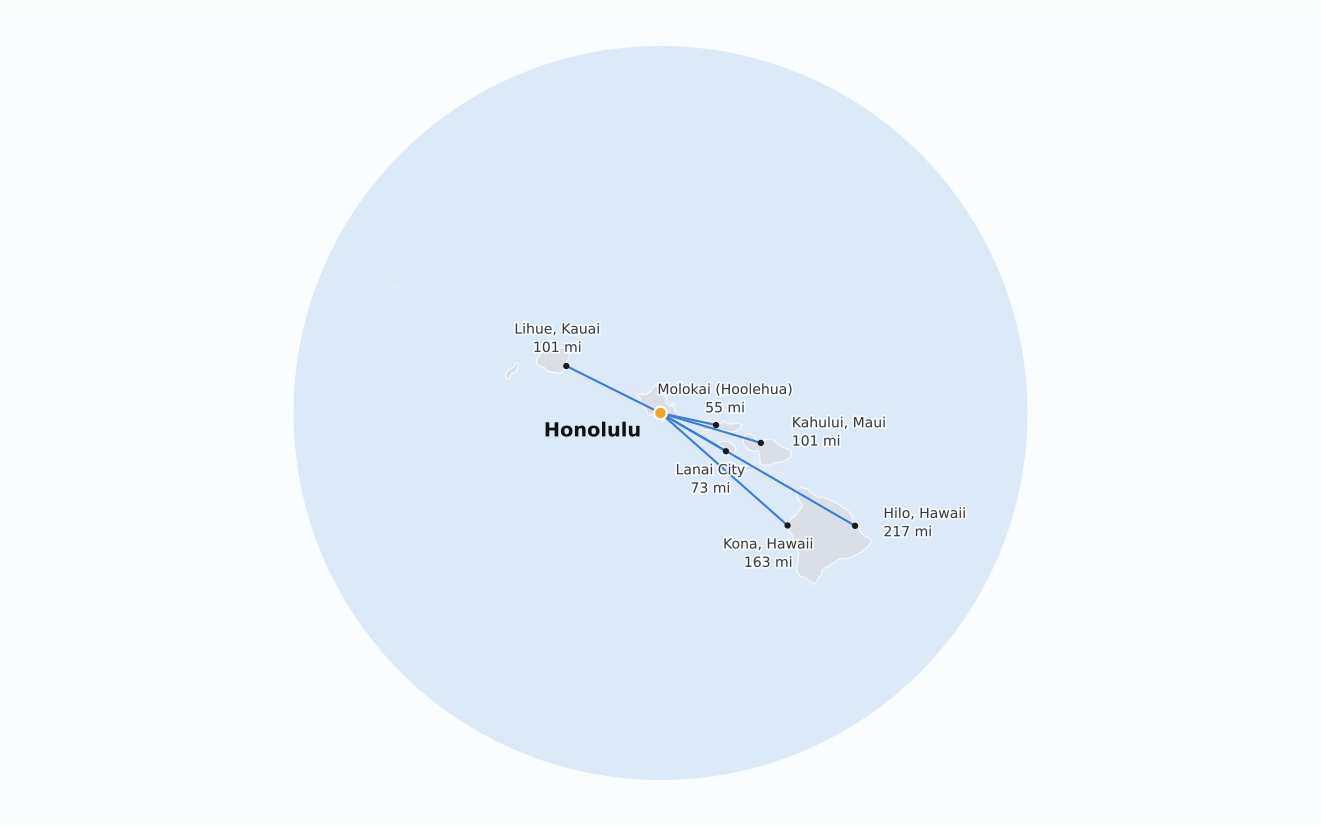
Honolulu → Hilo, 349 km · Zuri about 90 minutes · the inter-island barge, a day or more
One Hawaiian hub: every inhabited island in the state, from a single base.
Time-critical blood, medicines, and lab samples between hospitals, labs, and islands, over routes the road cannot serve in time. One hub reaches a hospital network hundreds of kilometers wide, and the samples come back on the same aircraft.
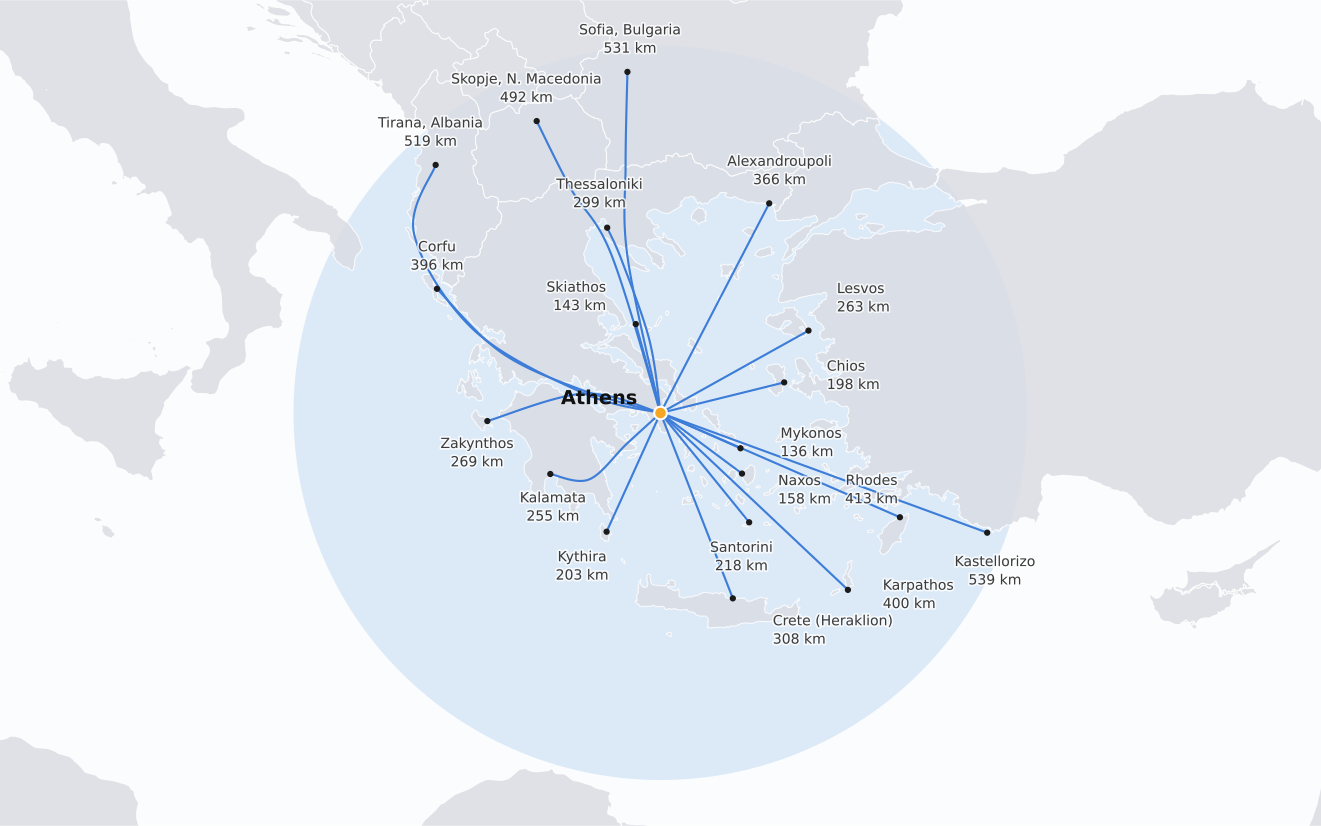
Athens → Mykonos, 136 km · Zuri out and back the same morning · the ferry, half a day each way
One Aegean hub: a national health network, Mykonos at 136 km to Kastellorizo at 539.
Rafts, beacons, and survival kits delivered to the scene ahead of the boats, and patrol equipment repositioned between coastal stations and offshore islands without pulling a vessel off task. Zuri carries equipment and cargo, not people.
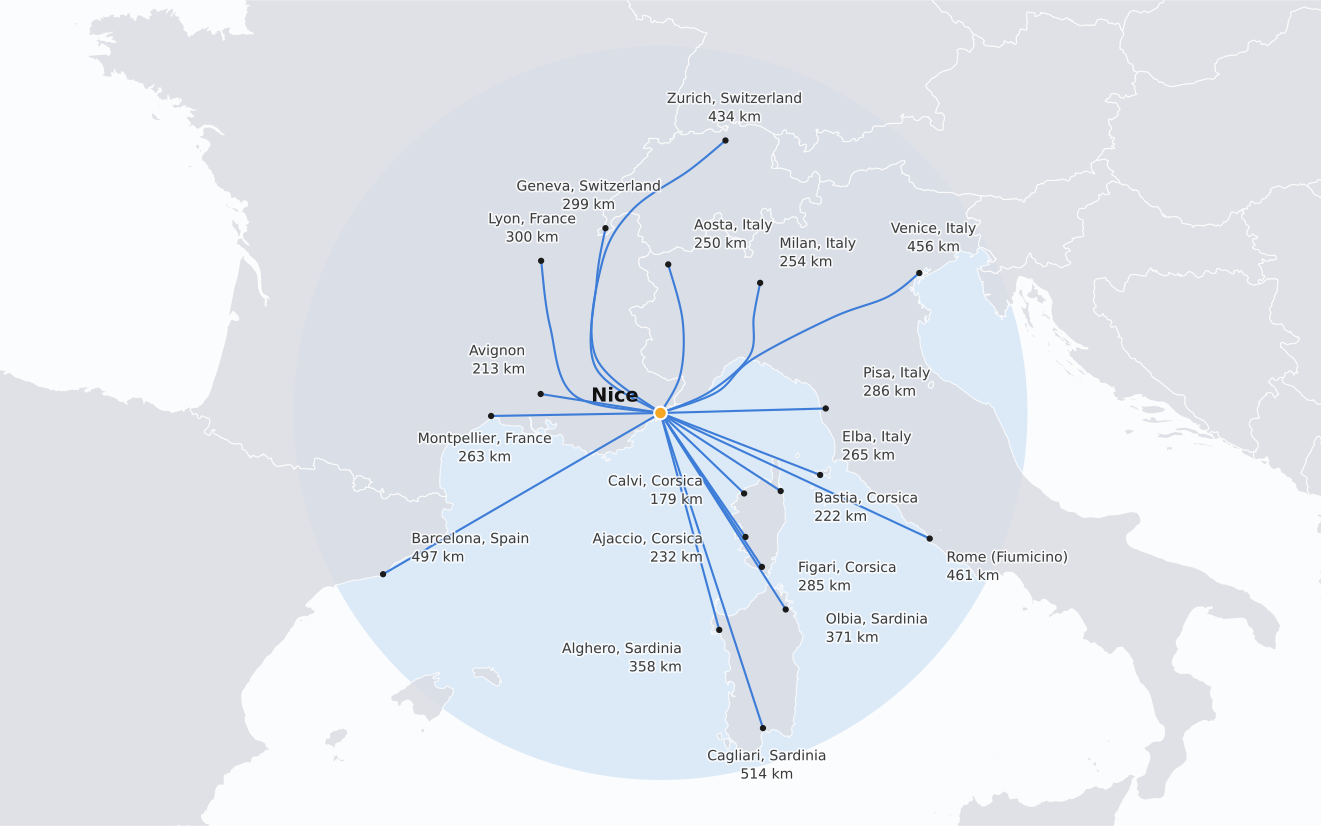
Nice → Calvi, 179 km · Zuri on scene inside the hour · the patrol boat, five hours out
One coastal hub: four countries and two islands in reach.
Defense & security
The risk is sending people.
ITAR-free, built on a sovereign European supply base, and designed for NATO interoperability. Every mission below inherits that.


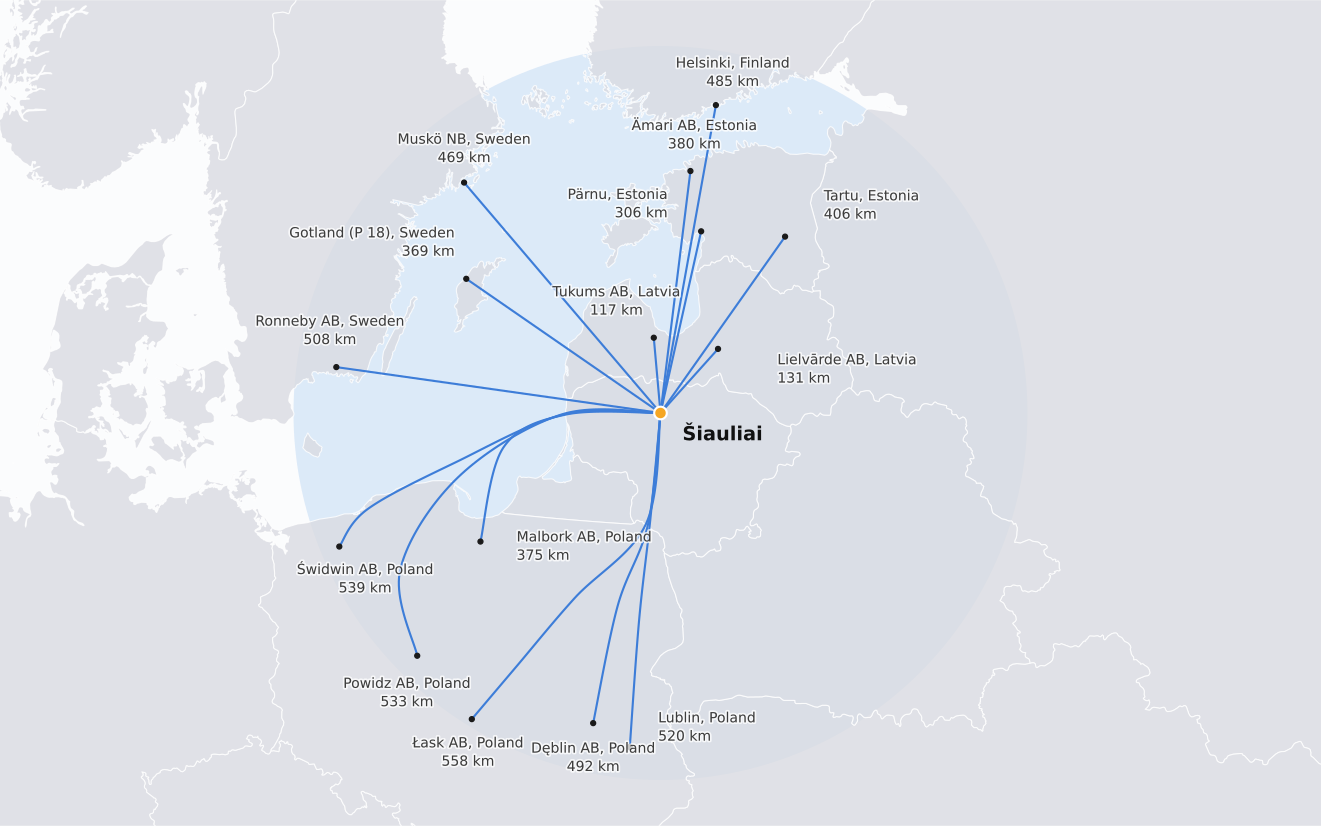
Rations, fuel, ammunition, and spares to crews and depots held back from contested ground, hundreds of kilometers at a time, ship to shore included. Distance is the protection, and the leg that would otherwise expose a crew is flown without one.
Šiauliai → Ämari AB, 380 km · Zuri under two hours, no crew exposed · a road convoy, most of a day
One Baltic ring: five nations' bases inside a single reserve circle.
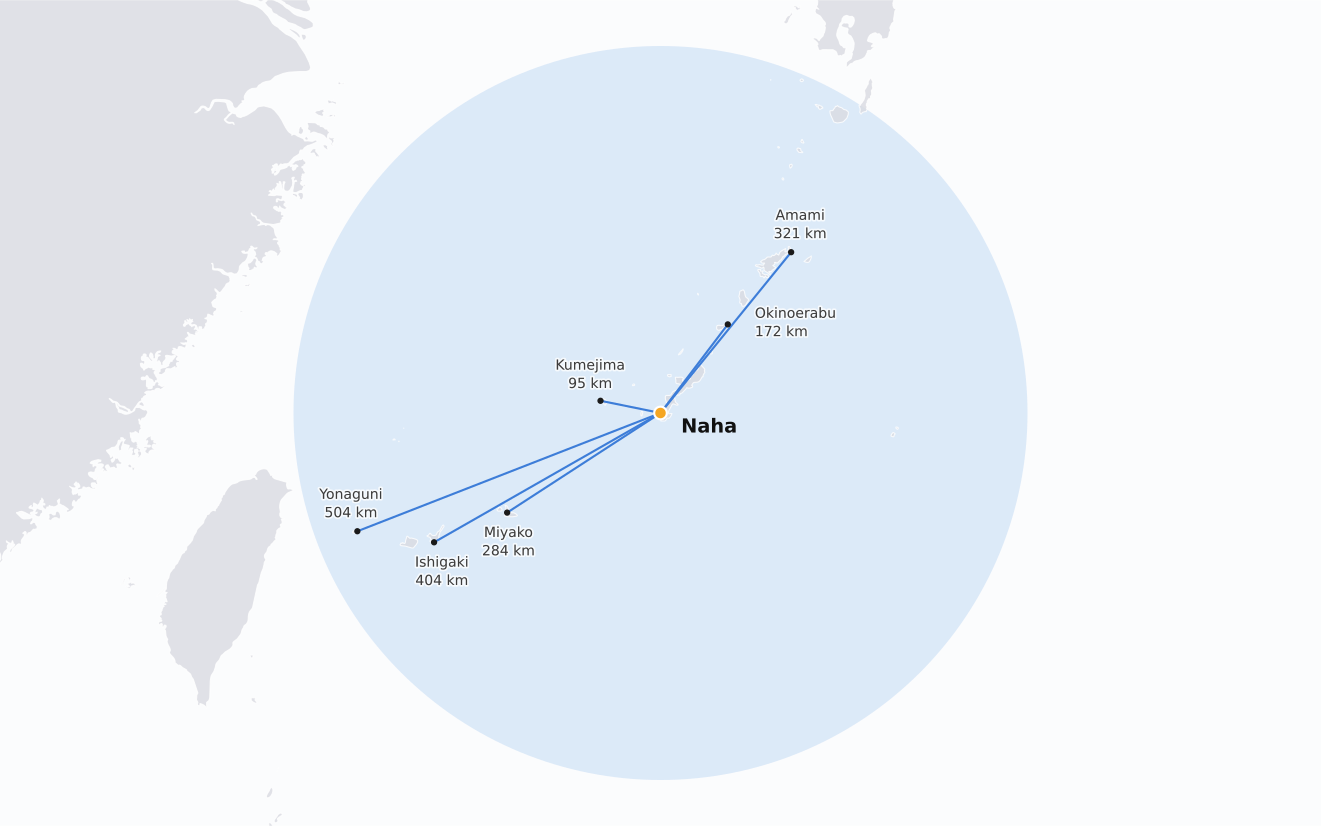
Swappable EO/IR, SIGINT, or radar payloads over land and littoral, and a loitering relay node above dispersed forces. Long linear patrol is what a wing is for: pipelines, grids, ports, and borders. Between resupply tasks, the logistics fleet doubles as the sensing fleet.
Naha → Yonaguni, 504 km · Zuri on station in about two hours · a crewed patrol aircraft, with a crew aboard throughout
One island chain: the picket line from Kumejima to Yonaguni, all inside the circle.
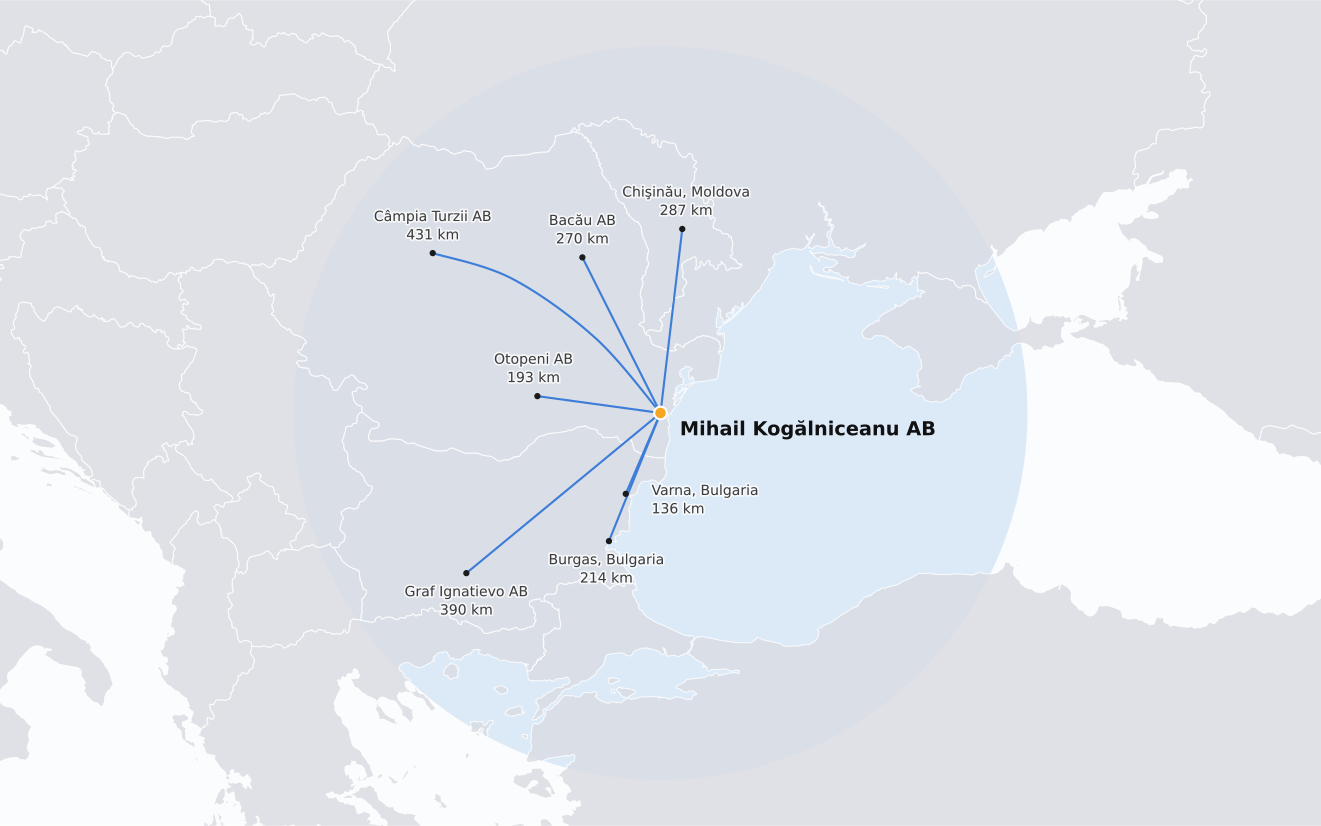
Batteries, ammunition, medical supplies, and spares dispersed from the flank's main hub through sky where satellite navigation fails daily. Flown uncrewed, navigating by vision when signals are jammed, spoofed, or gone.
Mihail Kogălniceanu AB → Chișinău, 287 km · Zuri under 90 minutes, no crew exposed · a road convoy, a border crossing and most of a day
One Black Sea ring: four air bases, two ports, and a partner capital inside a single reserve circle.
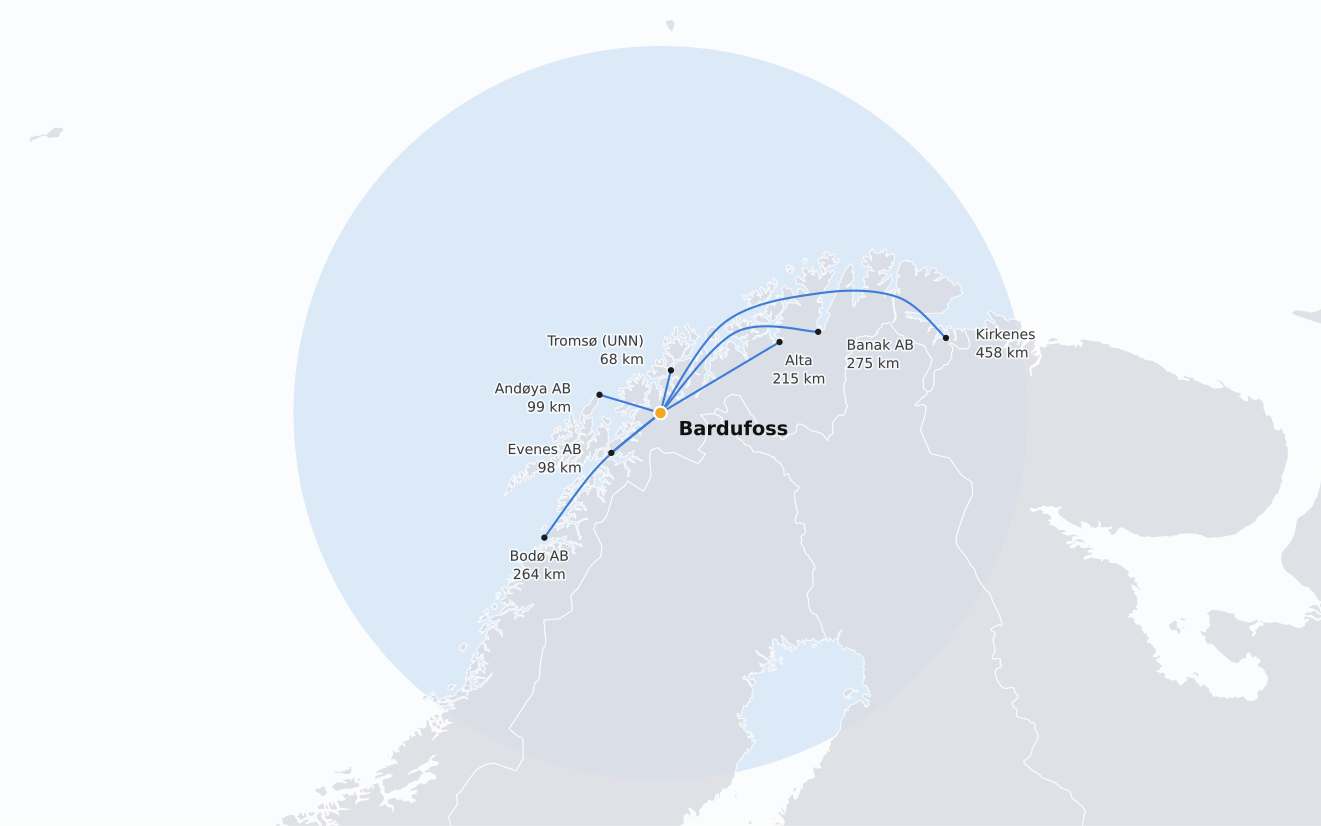
Blood, equipment, and medical kits to the point of injury ahead of the evacuation, and resupply for the aid station that keeps working after the road closes. High-latitude distances and difficult ground access are exactly the gap.
Bardufoss → Kirkenes, 458 km · Zuri forward in about two hours · the road, most of a day, weather permitting
One Arctic hub: Andøya to Kirkenes, with the university hospital at Tromsø 68 km out.
Routes shown are representative capability scenarios, not scheduled services; mission views are renders.
Sourcing, navigation under jamming, degraded modes, and the demonstrator behind it are on the defense page.
More missions
The list keeps growing.
Every mission comes down to three things: the payload, the distance, and the landing site. If those three fit, the mission probably does.
Disaster relief
Supplies past broken roads and bridges, from the first day.
Time-critical parts
Line-down components between plants and warehouses, at any hour.
Scientific payloads
Instruments over sea, ice, and terrain that no road serves.
Coastal surveillance
Persistent watch over coastal zones and economic waters, crew ashore.
The comparison
The alternatives, measured.
| Cargo multicopter | Zuri uncrewed cargo VTOL | Twin-engine helicopter | |
|---|---|---|---|
| Payload | ≈5–30 kg at full load | 145 kg max · 115 kg at full range | Tonnes-class |
| Usable range, full load | ~16–30 km | 569 km with the full 30-minute reserve | Comparable, with fuel stops |
| Crew aboard | None | None; one operator on the ground | Two, at risk on routine runs |
| Ground needs | Charging, calm weather | Any fuel station, deck, or cache | Fuel, hangar, crew base |
Representative classes, internal engineering analysis, standard conditions; the comparison crosses categories. Helicopters keep heavy lift and hover-intensive work.
The approval path
Approved route by route.
Every mission above flies under EASA's Specific category: risk-assessed per route, authorized by national authorities, no passenger certificate required. Over-water routes are the cleanest cases and approve fastest.
The rulebook, in practice →Frequently asked questions
About the missions.
What can it deliver to a ship or platform offshore?
Up to 145 kilograms per flight to a deck, a platform, or an island, with no crew aboard and no runway at either end. Offshore resupply today means a costly helicopter, a slow boat, or a small drone carrying about five kilograms; Zuri reaches the same decks with over a hundred kilograms.
How far can it fly a resupply mission?
679 km design range, 569 km with a full 30-minute reserve, carrying 115 kilograms; up to 145 kilograms on shorter routes. Payload trades against distance mission by mission, and refueling takes minutes wherever fuel exists.
Can it operate away from airports?
Yes. It takes off and lands vertically from airfields, decks, and unprepared surfaces, and runs on AVGAS, regular automotive gasoline, or bioethanol, so a fuel cache is an airport. Nothing has to be built before it can serve a site.
What defense missions does it fly?
Austere and remote resupply first: hundred-kilogram loads moved hundreds of kilometers to crews and depots kept back from contested ground, with no one on board. The same airframe swaps to ISR and sensing or communications relay in the field. It is ITAR-free, built on a sovereign European supply base, and designed for NATO interoperability.
Is it ITAR-free?
Yes. The aircraft is designed and built in the EU on a sovereign European supply base, so export and deployment decisions stay in Europe. It is designed for NATO interoperability.
How do payloads swap between missions?
In the field, on a swappable interface: cargo, sensing, or communications relay on the same airframe. The module changes; the aircraft, the operator, and the logistics behind it do not.
Can Zuri move parts between warehouses or factories?
Yes. Moving stock between warehouses and flying time-critical parts are natural missions: over a hundred kilograms, on demand at any hour, with no crew to schedule. When a production line is waiting on one component, the aircraft flies as soon as the part is ready.
Tell us your mission.
Payload, distance, environment: we will tell you what the aircraft does with it, and when.