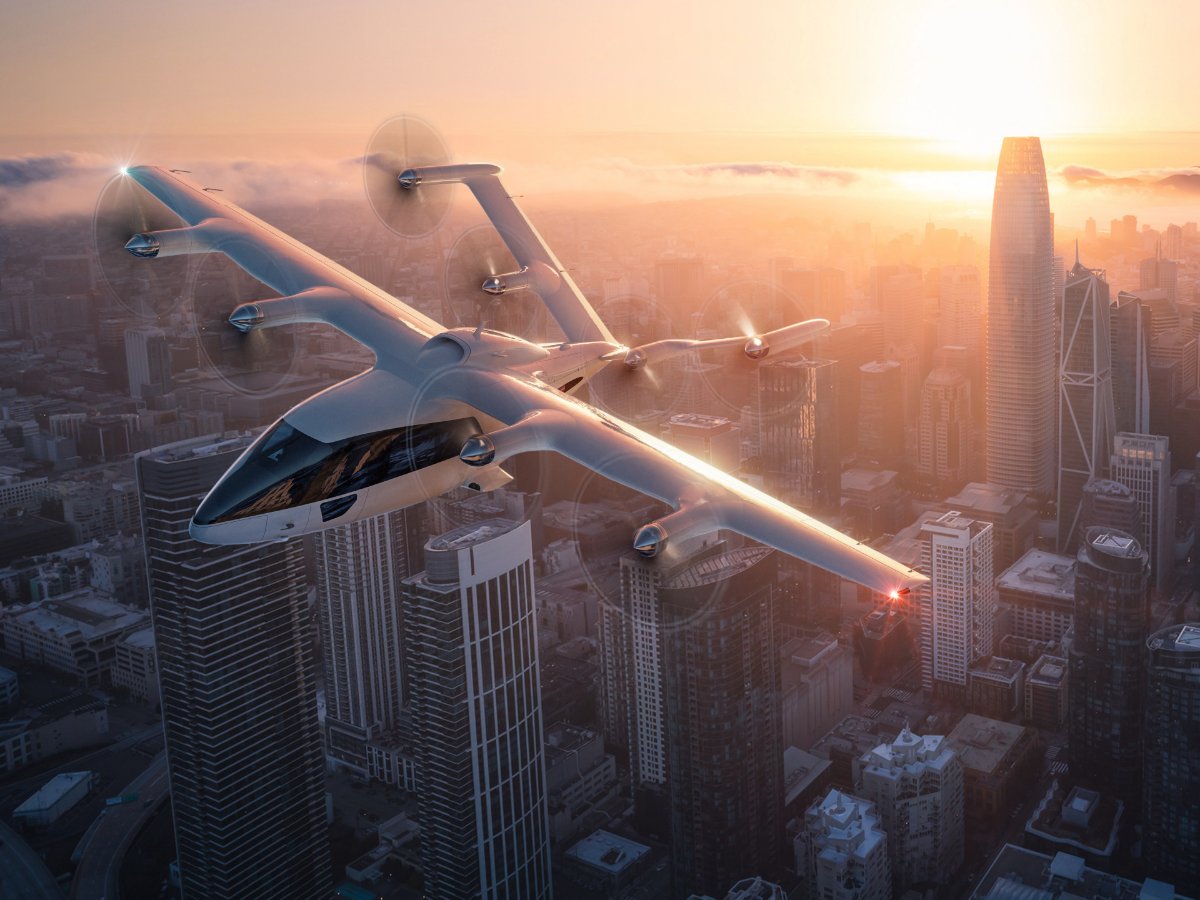
Zuri builds the aircraft that make regional distances a short trip: direct, on demand, affordable, for goods and for people.
The problem
Airplanes end at the runway. Helicopters end at the invoice.
A century in, if your trip, your part, or your patient is not near a runway, aviation shrugs and the road takes the day.
But the sky doesn't end where the runway does. We build aircraft with helicopter access and airplane range. They can use an airport. They just don't need one. A pad, a deck or a field is enough, hundreds of kilometers from where they lifted off.
Carrying people that way has been the aim since the first sketch: a pilot and five passengers, door to door. New aircraft earn trust in stages, so the first Zuri inservice is uncrewed: cargo flies years earlier under drone rules, and every flight builds the operational record the passenger aircraft will inherit.
The staircase
Risk down, value up.
Each step deliberate: every technology chosen for now and proofed for later, and every stage flown before the next ships. The cargo aircraft is where the plan starts earning.
Value
Business & technology risk
Revenue starts
20212026–272027–20292029–2035
In order: prove the architecture. Fly cargo, uncrewed, and earn. Certify the six-seater. Fly you.
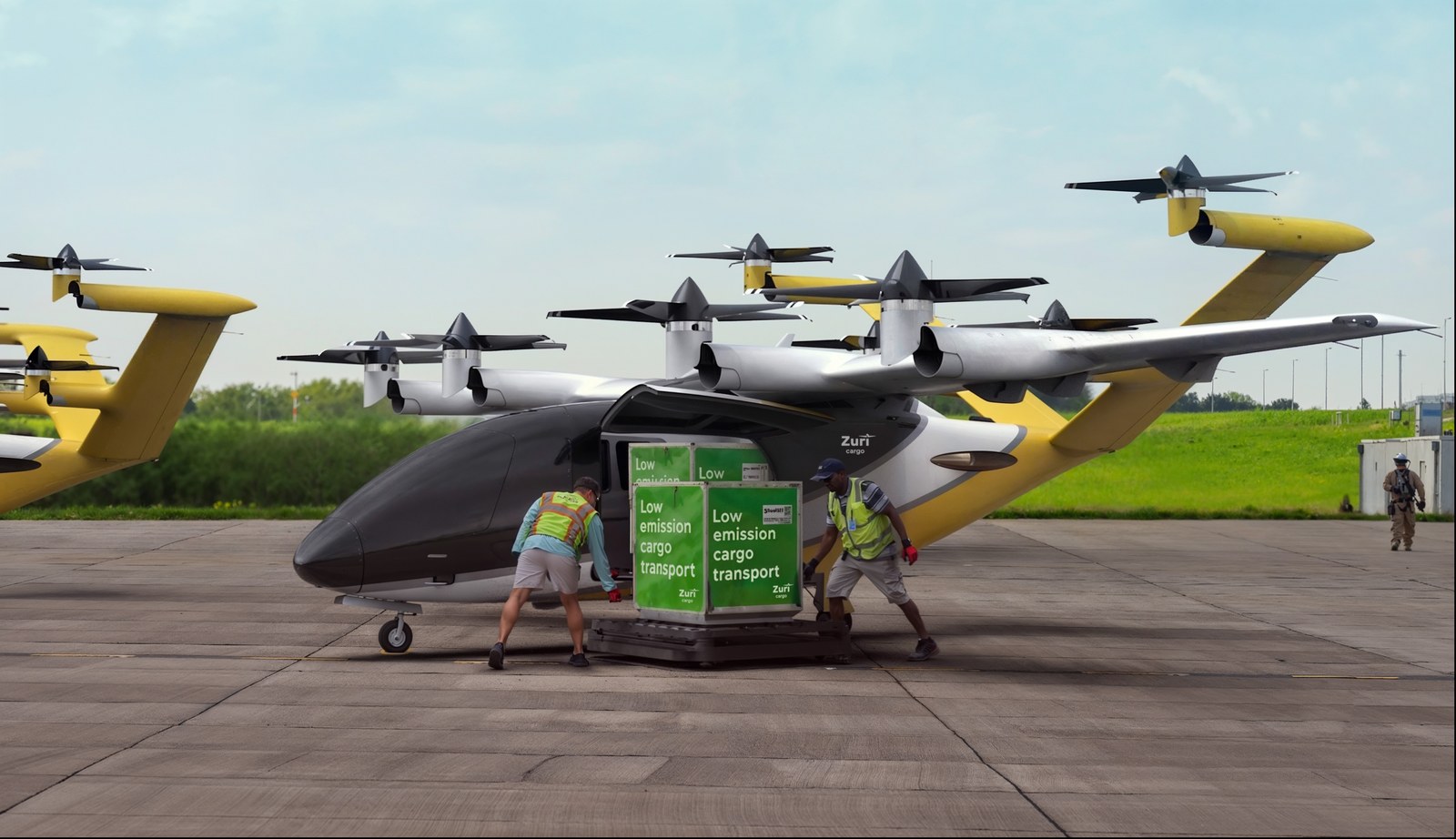
Not needs we invented: supplies in the hundred-kilogram class where roads end, disaster zones with the grid down, time-critical parts and medicine, sensing and relay, resupply across borders. The missions are real and current, and the aircraft is built for exactly them.
Uncrewed cargo VTOL: the first aircraft to fly in service.
It earns years earlier.
Under EASA's drone-category approvals, the cargo aircraft reaches the market at a small fraction of a type certificate's cost and time. Revenue carries more of the type certificate, instead of dilution doing all the work.
It proves the company in service.
Manufacturing, operations, reliability, support, and a working relationship with the regulator: matured in daily commercial service, not promised on paper.
It flies years before it carries you.
The technology is validated on TD 2.0 and proven by the uncrewed cargo aircraft in real-world service, with years of data behind it, before a passenger ever sets foot aboard.
Thought through, safe, redundant, economical, practical, and built for the years to come.
Every Zuri airframe is one platform wearing its mission: six seats, pallets, a stretcher, or sensors. The six-seater flies passenger first, with the variants the original vision named behind it.
Passenger
A pilot and five passengers: the configuration the whole plan exists to certify.
Direct flights between regional destinations without the major airport: departures closer to city centers, business hubs, and private properties. The cabin configures to the mission, from personal travel and tourism to private charter and business mobility.
Cargo
Flat bay, big doors, standard pallets: the uncrewed cargo aircraft's bigger sibling.
Regional delivery without runway infrastructure: confined and hard-to-reach sites get direct service, from metropolitan zones to remote locations. Suited to valuable, time-critical, and specialized cargo, with easy ground handling and rapid loading on both ends.
HEMS / SAR
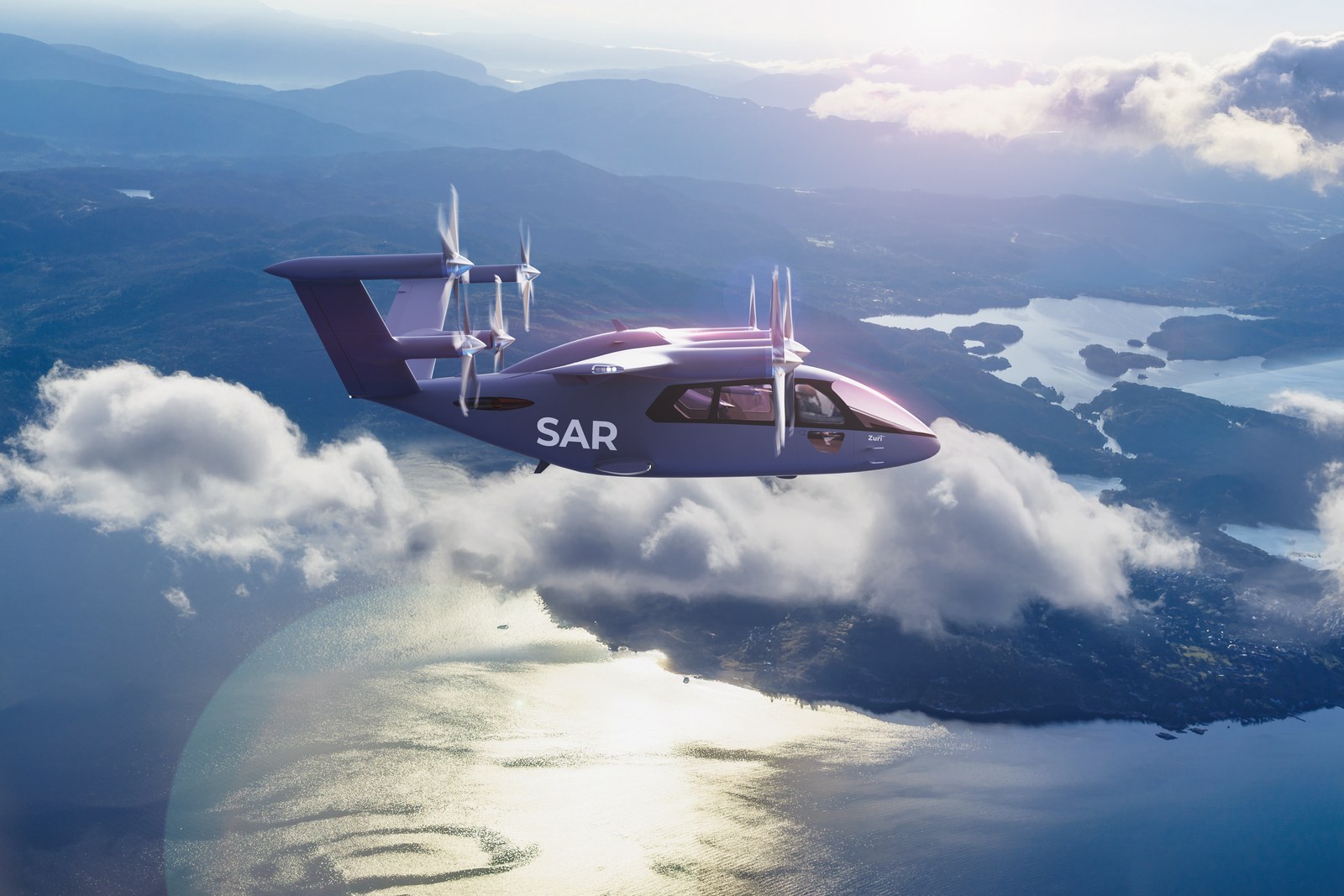
Medical equipment and crews reaching patients where road and helicopter economics fail.
Medical evacuation and search and rescue in remote, urban, and difficult environments, where roads and terrain slow everything else. The interior configures for patient transport, medical support, and rescue equipment; hybrid range keeps crews on station longer than batteries allow.
Security & defense
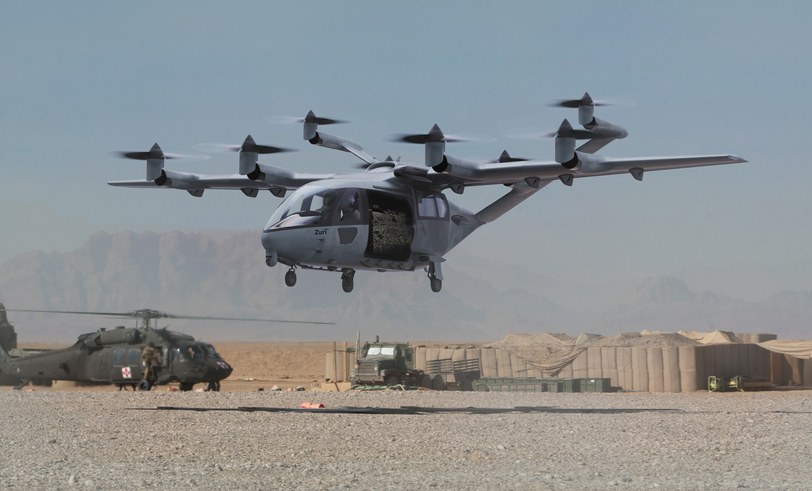
Patrol, sensing, and forward transport: the variants the original vision named.
Fast deployment without runways for border patrol, law enforcement, and government operations in confined or infrastructure-limited environments. Configurations cover personnel transport, equipment delivery, and surveillance support, with the endurance for extended taskings.
The market waiting
Demand, already on paper.
30 LOIs
signed by operators for the six-seat aircraft: the market waiting at the top of the staircase
The world it serves
Door to door, on your schedule, without airports.
The industry calls this regional air mobility. We call it the map, redrawn: trips of a few hundred kilometers without the airport queue or the day on the road.
New York → Nantucket · 330 kmZuri 1 h 45airline 4 h 30 · road 6 h
Brno → Stuttgart · 540 kmZuri 2 h 05road 8 h
Riyadh → Abha · 840 kmZuri 3 h 25airline 5 h 15 · helicopter 5 h 50
Sendai → Hachinohe · 260 kmZuri 3 h 05airline 5 h 20 · road 8 h
Door-to-door estimates from the original mission studies; representative journeys, not scheduled services.
It lands in 26 × 26 meters: a pad, a deck, a field, or an airport if that is what is there. And it flies on sustainable aviation fuel, with the sustainability case built in from the first design.
Frequently asked questions
About the destination.
What is the six-seat passenger aircraft?
The destination of the staged plan: a certified hybrid VTOL carrying a pilot and five passengers about 900 km at a 350 km/h cruise (400 km/h maximum), on sustainable aviation fuel, door to door, without airports. Type certification is planned in the 2029 to 2035 window.
What can the six-seat aircraft be used for?
Four mission families on one platform: passenger transport with a pilot and five passengers, cargo, emergency response with HEMS and SAR interiors, and security and defense taskings such as border patrol, surveillance support, and personnel transport. The airframe stays the same; the fit-out wears the mission.
When will the six-seater fly?
After the cargo aircraft is in service. TD 2.0 flies the architecture first, with first flight planned for Q2 2027; the cargo aircraft enters the market in the 2027 to 2029 window; the six-seater follows toward type certification between 2029 and 2035.
Why build the cargo aircraft first?
It pays, and it teaches. The uncrewed cargo aircraft reaches the market years earlier under EASA drone-category approvals, earns revenue from 2027 to 2029, and every flight hour matures the technology, the organization, and the track record the six-seater inherits.
What are the letters of intent?
Thirty letters of intent signed by operators for the six-seat aircraft. They are non-binding statements of intent to purchase rather than orders, and they are attached to the six-seater at the top of the staircase, not to the uncrewed cargo aircraft that reaches the market first. What they evidence is demand for the destination, already on paper, years before the aircraft is certified.
How does Zuri fit into advanced air mobility?
Advanced air mobility (AAM) is the industry term for new electric and hybrid-electric aircraft serving trips conventional aviation cannot; regional air mobility (RAM) is its long-distance form. Zuri builds for the regional case: the uncrewed cargo aircraft puts the architecture to work first, and the six-seat passenger aircraft carries regional air mobility to people.
Can I see inside the six-seat cabin?
Yes, at full scale and for free: the Zuri VR walkthrough for Meta Quest puts you inside the six-seat cabin as designed, years before the aircraft is certified. The flying hardware is a different matter, and the proof page covers where to see it.
The destination is set.
The staged plan is how Zuri gets there; the Series A is how you join it.